



Cashmere has a reputation that runs ahead of it. It is soft, expensive, and often described in language borrowed from wine lists. Scottish cashmere sits at the top of that pyramid, and there are good reasons for it — but also a few assumptions worth correcting before you spend real money on a jumper. The short version: Scotland does not have cashmere goats. What it has is a cluster of mills, a few centuries of knitting knowledge, and a finishing tradition that gives the fibre a particular character.
Where the fibre comes from, and where Scotland comes in
Cashmere down is combed from the undercoat of goats in Inner Mongolia, Mongolia, Afghanistan, Iran and parts of Central Asia. Each animal produces only a small amount of usable down each year — a few hundred grams at most, and only the finest part of that is suitable for knitwear. That scarcity is the main reason cashmere costs what it does.
So "Scottish cashmere" describes where the fibre is processed, not where it grew. The raw down arrives in bales, and the work of turning it into a jumper happens here: dehairing, dyeing, spinning, knitting, washing, finishing, linking and mending.
Most of that work sits in the Scottish Borders — Hawick, Selkirk, Galashiels, Innerleithen, Walkerburn — with spinning and knitting also in the north-east and Ayrshire. Some of these mills have been at it since the 1700s or 1800s, and the skills are still passed down through apprenticeships rather than learned from a manual.
What actually happens inside a mill
The first step is dehairing. Raw cashmere arrives mixed with coarse guard hair, and the two have to be separated so only the soft down remains. From there the fibre is dyed — sometimes as loose fibre, sometimes as yarn — then spun.
Spinning is where a lot of the quality is decided. A good spinner works with long fibres and keeps the twist low enough to stay soft but high enough to hold together. Weak, over-twisted yarn feels harsh; under-twisted yarn sheds and pills.
Ply, gauge and the shape of a jumper
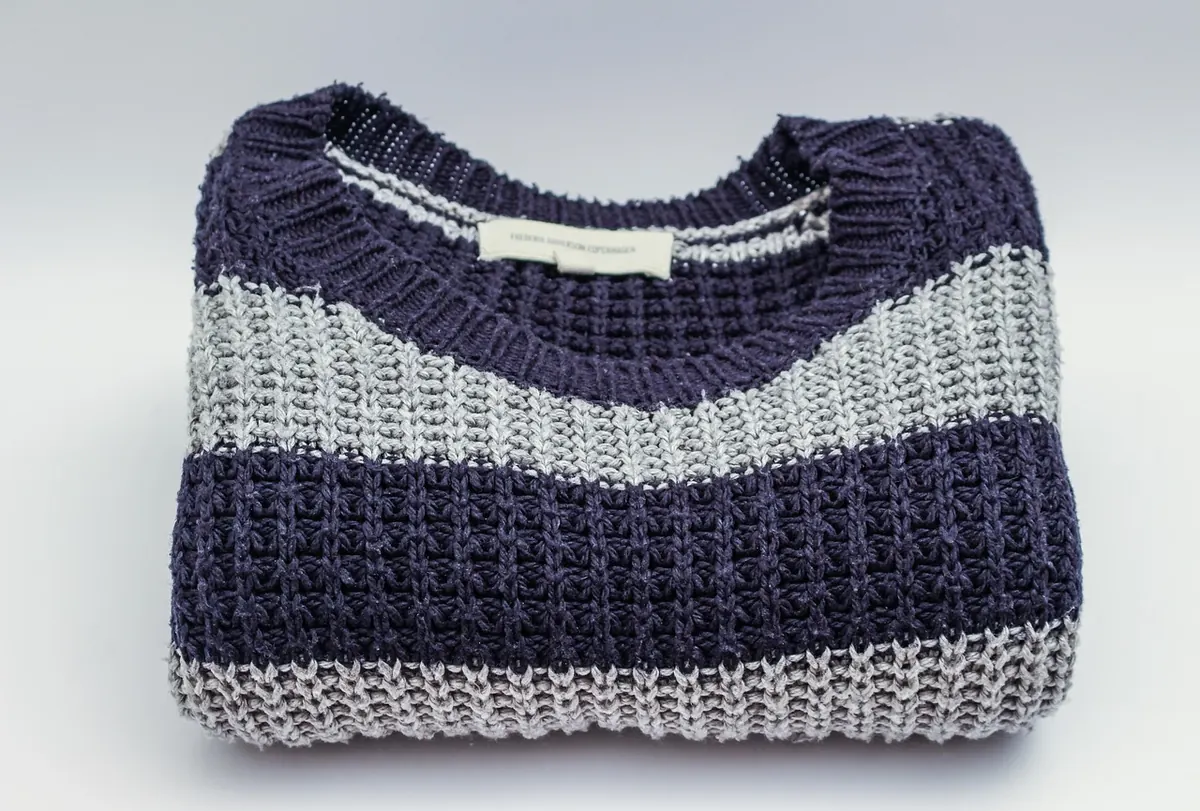
Two-fold yarn — two singles twisted together — is stronger and more stable than a single, and it is usually the mark of a garment meant to last. Gauge refers to how many needles per inch knit the fabric. A 12-gauge jumper is substantial and warm; an 18- or 21-gauge is fine, light and good for layering. Neither is better. They are different jobs.
Then comes finishing: washing and tumbling in soft water, pressing, hand-linking the shoulders and neck, and mending any faults by hand. Mills in the Borders have long credited the softness of the local water for part of the hand-feel, and whatever the chemistry, the finishing stage is where Scottish cashmere earns its reputation. The result is usually a slightly fuller, rounder feel than the very slick, high-twist style associated with Italian knitters.
Texture, weight and warmth
Cashmere is warm for its weight because the fibres are extremely fine and crimped, so they trap a lot of air. A well-made two-ply jumper at 12-gauge can be genuinely warm at 300–400 grams, while a fine-gauge cardigan at half that weight is more about layering than insulation.
Warmth also depends on fit. A jumper that is tight under the arms compresses the fabric and loses the air pockets doing the work. Look for a little ease through the body and sleeves long enough to cover your wrists without pulling.
What to look for when you buy
- Composition. Check the percentage, not just the word "cashmere". Blends with silk, cotton or fine wool are perfectly good, but they change drape, durability and how the garment ages.
- Fibre fineness and length. Good knitwear cashmere generally sits somewhere around 14 to 17 microns, with longer fibres that resist pilling. Very short fibres feel lovely in the shop and pill within weeks.
- Ply and gauge. Look for "two-ply" or "2/28" type yarn descriptions; ask which gauge the knit is if it isn't listed.
- Weight. If a jumper is described as cashmere but weighs almost nothing, it will behave accordingly.
- Construction. Fully fashioned panels — knitted to shape and linked rather than cut from a sheet of fabric — waste less and hold their shape longer. Check the shoulder seams and neckline for neat, even linking.
- Wording. "Made in Scotland" is a much stronger claim than "designed in Scotland" or "Scottish cashmere" on a garment knitted elsewhere. If the origin matters to you, read carefully. A named mill is usually a good sign.
- The try-on. Raise your arms, sit down, check the underarm and the ribbing. Ribbing should spring back, not stay stretched.
Caring for it so it lasts
Cashmere is a protein fibre, and it responds well to being treated gently and rarely. Rest a jumper a day or two between wears so the fibres recover. Air it rather than washing it after every outing.
- Hand wash in cool water with a mild wool-safe detergent. No agitation, no wringing.
- Rinse at the same temperature, then press the water out inside a towel.
- Dry flat, reshaped, away from direct heat and sunlight.
- Deal with pills using a cashmere comb or a small fabric shaver, not by pulling them off.
- Store clean and folded, never on a hanger. Moths eat protein fibres, so use a sealed bag or box with cedar or lavender through the summer.
Buying well without overpaying
Good Scottish cashmere is expensive because the fibre is scarce and the labour is skilled, and there is no honest way around that. What you can do is buy less of it and buy it better. One well-made two-ply jumper worn for a decade beats four thin ones that pill by February.
If the full price is a stretch, look at mill shops, end-of-season sales and slightly quieter colours, and check whether the maker offers a repair or re-linking service — many Scottish mills do, and a small mend is often the difference between a garment lasting three years and fifteen. Buy for the fibre, the construction and the fit, and the label becomes a detail rather than the whole decision.
Photo: Hans / Pixabay