




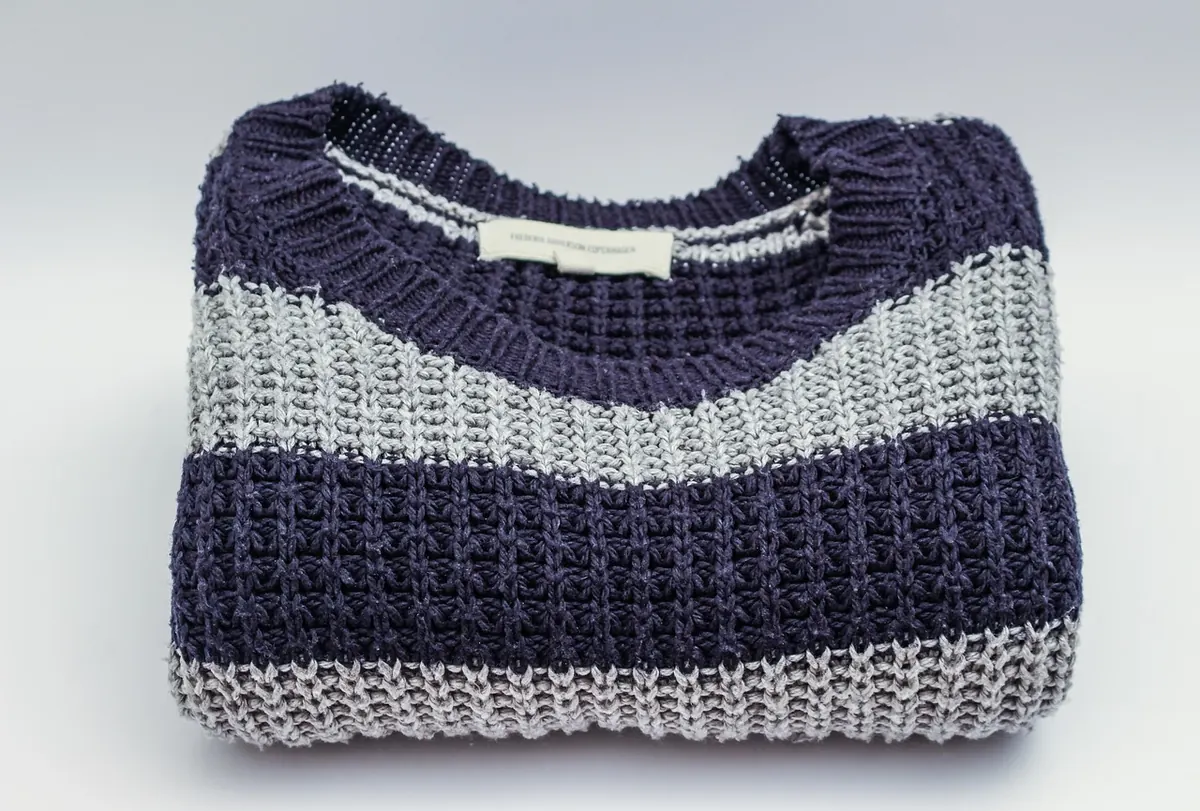
A sweater can look perfect on a hanger and be a disappointment by the third wash. The fibers that felt so soft under the shop lights go fuzzy under the arms, the cuffs lose their snap, and a shoulder seam starts to slip. None of that is bad luck. It is almost always visible before you pay for it, if you know where to look. The checks below take about two minutes in a fitting room and will tell you more about a knit than the price tag does.
Read the Fiber Label First
Fiber content drives nearly everything else: how the garment feels, how it wears, how it washes, and how long it lasts. Read the percentages, not the words on the front of the tag. A "cashmere blend" can legally mean a great deal of wool and very little cashmere. The same goes for "merino" and "alpaca."
Natural fibers — wool, cotton, alpaca, cashmere, linen, silk — are not automatically better in every situation. A small percentage of nylon in a sock-weight yarn, or a touch of elastane in a ribbed cuff, can genuinely improve durability and recovery. What deserves suspicion is an acrylic-heavy yarn priced like a natural one, or a "wool sweater" where wool is the minor ingredient. While you are there, read the care instructions. If a basic pullover says dry clean only, ask yourself honestly whether you will do that.
Gauge: How Tightly the Fabric Is Knit
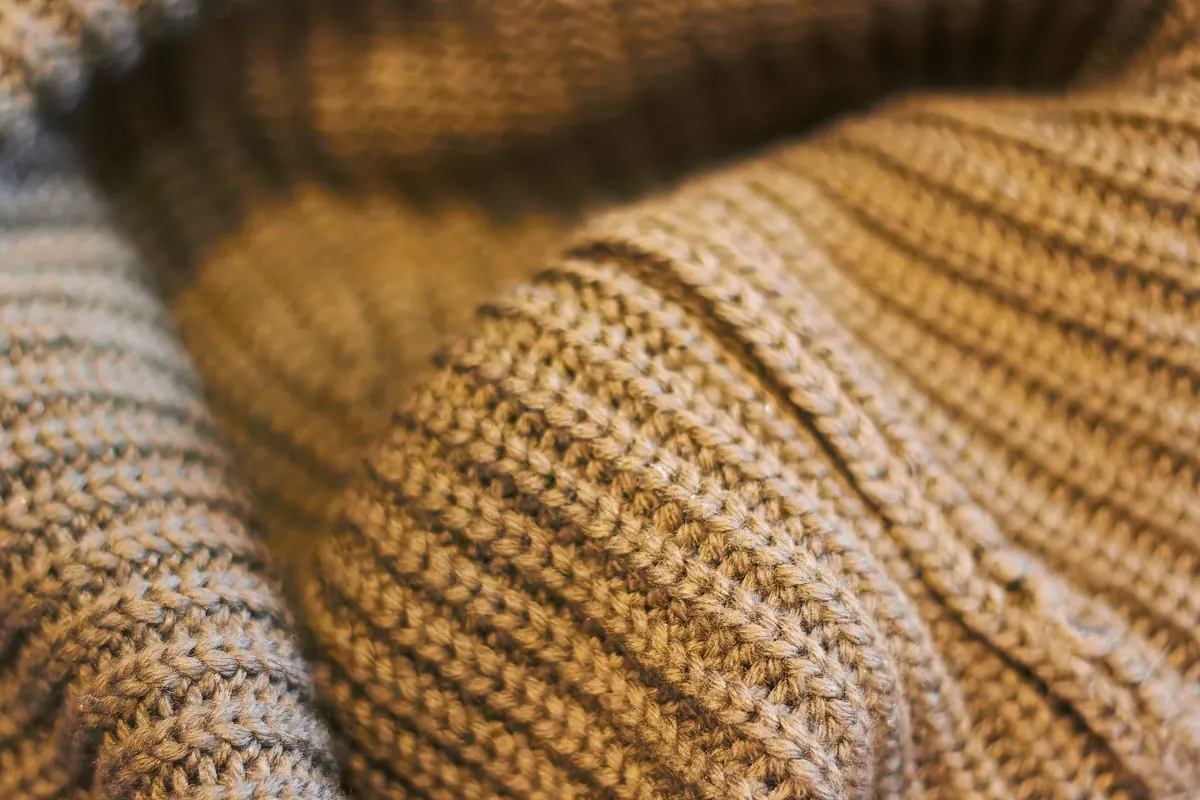
Gauge is simply how many stitches fit into an inch of fabric. Fine-gauge knits feel smooth and thin; chunky gauges feel dense and lofty. Neither is better on its own — a summer cotton knit and a winter fisherman's sweater are built for different jobs.
What matters is consistency. Hold the garment up to the light. You want small, even loops across the whole piece, with no thin patches, no visible holes where stitches have separated, and no laddered columns running down the body. Then look at the yarn itself. Yarns twisted from two or more strands — called plied yarns — are stronger and resist pilling better than a single loosely twisted strand of the same thickness. If you can see the individual fibers fraying apart at the surface, the yarn is loosely spun and will fuzz quickly.
The Stretch-and-Recover Test
Gently stretch the fabric across the body and let go. Good knitwear springs back to its original shape almost immediately. If it stays stretched, or if the stitches pull apart into a web of holes you can see through, the garment will sag at the elbows and lose its shape at the seat.
Do this test specifically on the ribbing at the cuffs and hem. Ribbing is engineered to expand and contract. Once rib has gone slack, no amount of careful washing will bring it back.
Turn It Inside Out and Study the Seams
Seams are where inexpensive knitwear gives itself away, because they are the part shoppers rarely check. Flip the sweater inside out and look at the shoulders.
- Linked or fully fashioned seams: the two knitted pieces are joined stitch by stitch, creating a neat chain along the shoulder line. Strong, flat, and flexible.
- Overlocked seams: raw edges wrapped in thread. Perfectly serviceable on some garments, but check that the stitching is not already pulling or fraying.
- Run a thumb along the shoulder seam. A good one lies flat with no hard ridge to dig into your skin.
- Check the underarms and side seams for skipped stitches, puckering, or loose thread ends that were never trimmed.
- Look at the neckline. A taped or bound neckline holds its shape for years. A raw, unstabilised edge will roll and stretch.
Trims, Edges and Finishing
Buttons should be sewn on securely, ideally with a small thread shank so the placket does not pucker when fastened. Button up the garment and check that the front band lies flat rather than gaping between buttons. Zippers in knitwear belong on a stable band or knit tape; a heavy metal zip stitched straight into a fine knit will drag and distort it over time.
Cuffs and hems should be ribbed or finished with a turned band, not simply cut and left raw. And if the garment comes with a spare button or a small packet of matching yarn, take it as a good sign: the maker expects it to be worn and repaired, not replaced.
Pilling: What You Can Test in the Shop
Pilling happens when short fibers work loose from the yarn, tangle together, and form little balls on the surface. Friction causes it, which is why pills appear first under the arms, at the cuffs, along the sides, and anywhere a bag strap crosses your body.
You can test for it before you buy. Find an underarm area or a side seam and rub the fabric briskly against itself for about ten seconds. Then look at the surface. If it has already started to fuzz, that is your answer.
Generally, loosely twisted yarns, short-staple fibers, and blends of natural fibers with acrylic pill most. Yarns described as combed or worsted-spun, tightly plied, and tightly knit resist pilling best. Even good knitwear may shed a little excess fiber in the first few wears — that is normal. A surface that fuzzes instantly is not.
The 10-Point Checklist
- Fiber content: read the percentages and know which fiber leads.
- Care label: will you realistically follow it?
- Gauge and stitch consistency: hold it to the light; look for even loops and no thin patches.
- Ply and twist: plied, tightly spun yarns hold their shape longer.
- Stretch and recovery: press and release the ribbing at cuffs and hem.
- Shoulder seams: flat, linked, no hard ridge.
- Side and underarm seams: no skipped stitches, puckering, or loose ends.
- Trims: buttons secure, zipper on stable tape, placket lying flat.
- Edges: cuffs, hem and neckline properly finished and firm.
- Rub test: ten seconds of friction at the underarm, then inspect for fuzz.
Try It On and Move Around
The final check is wearing it. Raise both arms overhead, sit down, reach across your body as if grabbing something from the passenger seat. Any tightness at the shoulder, any gaping at the buttons, tells you the fit is wrong regardless of how well the sweater is made. Good knitwear moves with you rather than pulling against you.
Buy the pieces that pass these checks. A sweater you wear forty times is a far better purchase than one that pills and sags after three, no matter what the tag said.
Photo: Primitive Spaces / Pexels