




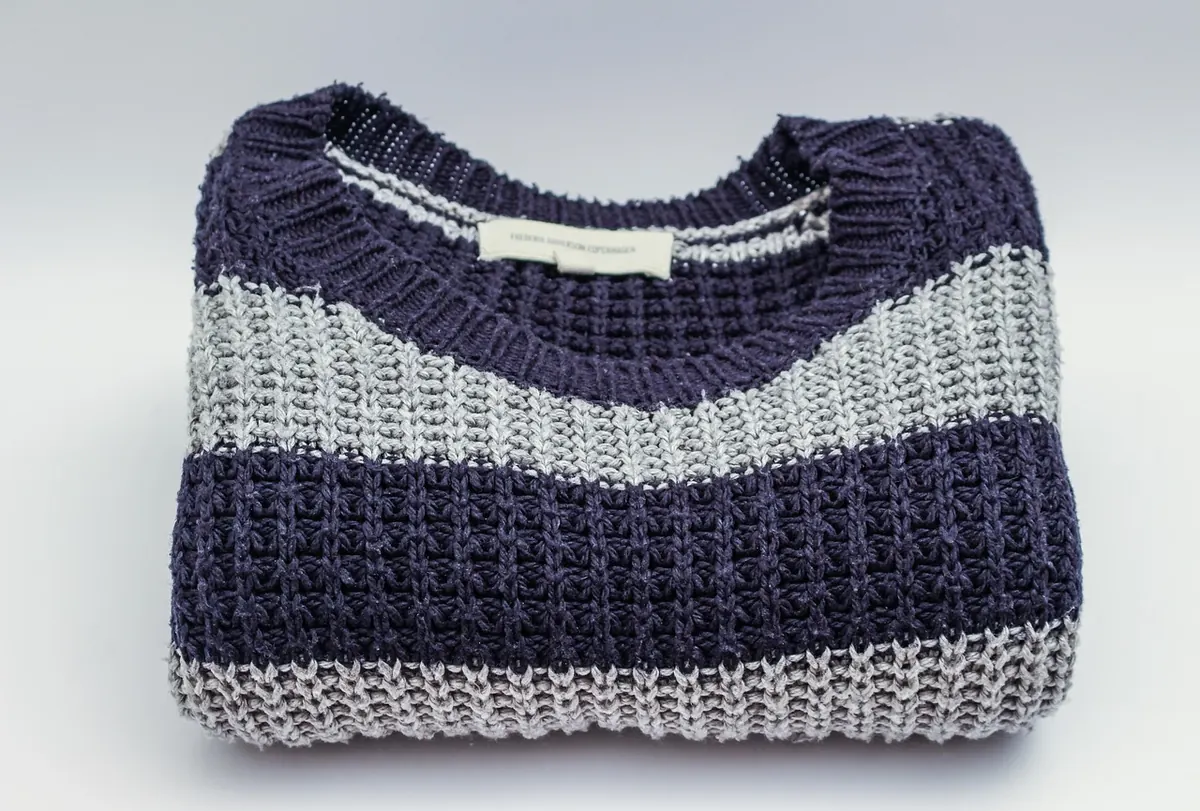
Few things take the shine off a favourite knit like a halo of tiny fuzz balls, especially across the chest and under the arms where it shows most. The good news: pilling is a surface problem, not a death sentence. With the right tool and ten quiet minutes, a tired-looking cardigan can come back looking almost new.
Here is what actually works, what ruins a knit, and how to keep the pills from coming back so fast.
Why knitwear pills in the first place
Yarn is made of fibres twisted together, and short fibres always work their way loose with friction. Those loose ends tangle with neighbouring fibres into small knots. Longer fibres stay anchored in the yarn, which is why a tightly spun merino pills far less than a soft, loosely spun blend, even if both feel lovely in the hand.
Pilling is not proof of poor quality, and it is not a sign you have cared for something badly. Almost every knit will pill somewhere, and it happens fastest in the places that rub: under the arms, along the cuffs and collar, at the hem where it meets a waistband or bag strap, and across the back if you carry a backpack or shoulder bag.
Three things speed it up: friction, moisture, and heat. Wearing a sweater against a rough coat, tucking it into stiff trousers, or tossing it into a hot dryer all give loose fibres more reason to migrate to the surface.
Pick the right tool for the fabric
There is no single tool that suits every knit. Match the tool to the yarn and the knit's structure.
- Fabric shaver (electric defuzzer). A small rotating blade behind a guard. Fast, effective and best on medium to tightly knit sweaters with a heavy crop of pills — wool, cotton, acrylic and most blends.
- Sweater comb. A fine-toothed metal or wood comb that catches pills and lifts them out of the fabric. Slower, but gentler, and the better choice for cashmere, fine merino and smaller patches.
- Lint brush or tape roller. Useful for light surface fuzz and dust rather than full pills.
- Pumice stone or pill stone. Works on sturdy woolens, but it abrades, so keep it away from fine knits.
A few things to avoid: pulling pills off with your fingers stretches the yarn and makes the problem worse; nail scissors tempt you to snip the knit itself; and a disposable razor will cut fibres, not just pills, unless you use it with an extremely light touch and a fresh blade.
How to de-pill with a fabric shaver
- Wash and dry the garment first, then lay it completely flat on a table or ironing board. Never shave a sweater while holding it in the air — the fabric shifts and the blade digs in.
- Smooth the area with your palm. Do not stretch it tight; a little slack is safer.
- Switch the shaver on and move in short, overlapping passes with very light pressure. Let the blade do the work. Pressing hard is the most common mistake.
- Empty the fuzz chamber often. A full chamber smears fibres back onto the knit.
- Slow down around seams, ribbing, buttons, pockets and anywhere the knit changes direction. Lift the shaver rather than turning it in place.
- Shake the sweater outside or brush off the loose fuzz once you are done, then fold it away.
Replace the blade or the whole shaver when it starts tugging instead of gliding. A dull blade on a good sweater is worse than no shaver at all.
How to use a sweater comb
Lay the knit flat and hold the fabric steady with your free hand. Draw the comb in one direction only — short, gentle strokes — keeping it almost flat against the surface so the teeth catch the pills rather than the yarn. Clear the teeth after every few strokes and work in small sections. On cashmere, comb only where the pills actually sit; over-combing thins the surface. When you finish, a light pass with a steamer or a hand held a few inches above the knit helps the fibres settle back into place.
Preventing pills before they start
Removing pills is satisfying, but reducing them is easier. Most of it comes down to friction and laundry.
- Wash knitwear less often. Wool and cashmere freshen with airing; hang them overnight rather than reaching for the wash basket.
- Turn garments inside out, use a mesh laundry bag, cold water and a gentle or wool cycle. Hand washing is kindest for fine fibres.
- Skip fabric softener and bleach, and use a wool-safe detergent rather than a heavy-duty one.
- Never tumble dry. Lay knits flat, reshape them, and dry away from radiators and direct sun.
- Rotate your sweaters and give each one a day of rest between wears so the fibres can recover.
- Watch the friction points: a crossbody bag strap, a seatbelt, a rough coat lining or a scratchy backpack will pill a sweater faster than anything else.
- Store folded, not hung. Hangers distort shoulders and let knits rub against whatever is beside them.
Delicate knits and awkward spots
Fluffy yarns with a deliberate halo — mohair, angora, some alpaca blends — should be left alone. That fuzz is the point of the yarn, and shaving it flat will leave a bald patch. If pills bother you there, use a comb sparingly on the worst spots and accept the rest.
Open, lacy and loose knits are the other risk. A shaver can catch a long float and cut it, which creates a hole. Use a comb instead, or a tape roller, and be patient. Chenille, velvet and boucle knits have a pile that a blade will slice off, so treat them as comb-only or leave them be. Ribbed cuffs and collars are dense enough for a shaver, but use light pressure and short passes; the same goes for cables, where pills collect in the valleys and the blade should run with the raised line, not across it.
A simple routine that keeps knitwear looking good
You do not need to de-pill a sweater every week. Twice a season, or once the fuzz starts catching your eye, is plenty. Keep a fabric shaver in a drawer and a sweater comb in your travel bag, and deal with pills before you pack a knit away for summer — fibres that have been smoothed down store better and come out looking fresher in autumn.
Store clean knits folded in a breathable cotton bag or a drawer with a cedar block, and check them once in a while for moths. If a favourite jumper still looks tired after all of this, the fibre may simply be worn out near the friction points, and no tool will fix that. Otherwise, ten careful minutes is usually all the difference between a sweater that goes to the charity bag and one you reach for every week.
Photo: hudsoncrafted / Pixabay