




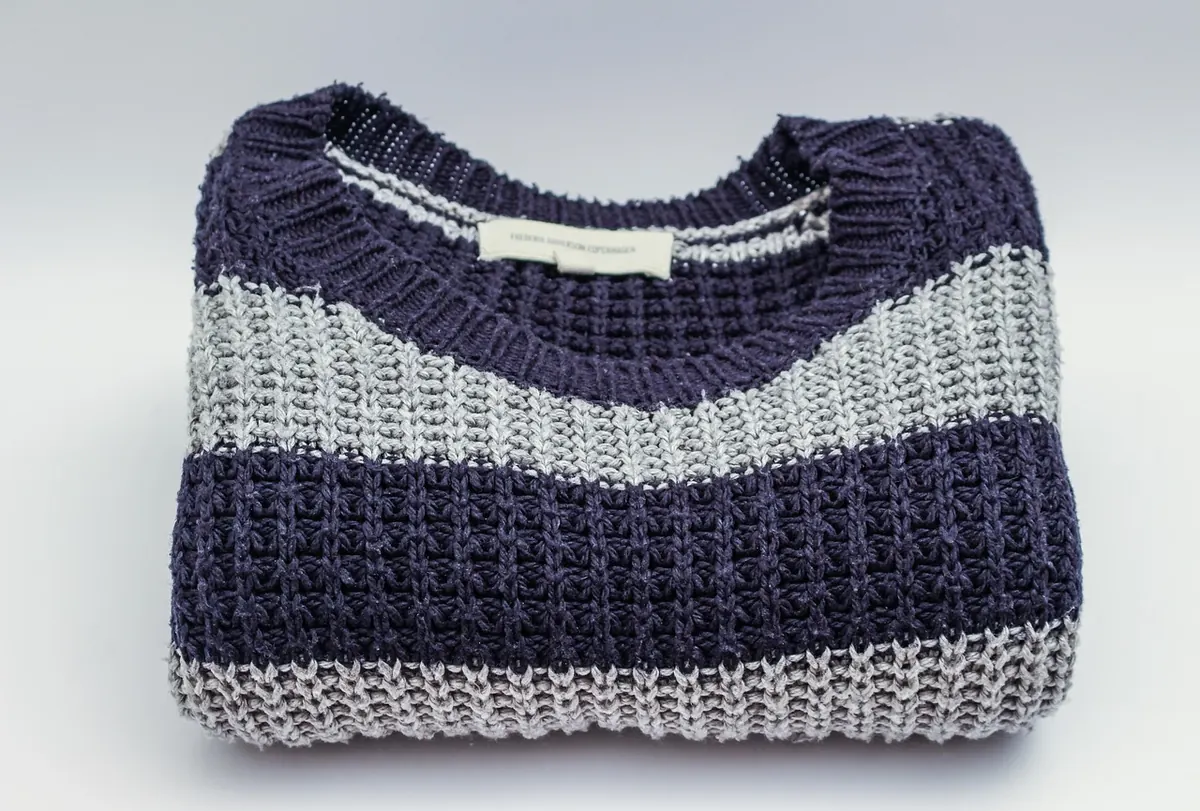
A sweater can be the most-worn thing in your closet or the one you keep adjusting all day. The difference is rarely the size on the tag. It is how the seams land on your body. Knitwear has some give, but it does not hide much: a shoulder seam that sits two inches down your arm will pull the whole garment out of line by mid-afternoon, and a hem that stops at the wrong spot can make a good sweater look like a borrowed one. Here is how each zone should fit, and how to check it in a fitting room, a charity shop, or your own hallway mirror.
Start With the Shoulders
If you only get one thing right, make it this. On a sweater with a set-in sleeve — the classic construction where the sleeve is sewn into a curved armhole — the shoulder seam should sit right at the outer edge of your shoulder, where the flat top of the shoulder turns down into the arm. Not on top of your neck, and not halfway to your elbow.
When that seam drifts outward, the whole sweater follows. You get a fold of extra fabric under the arm, the sleeve twists, and the hem creeps up. When it pulls inward, you feel a pinch at the base of the neck every time you reach forward.
Shoulder width is worth being fussy about because it is the hardest thing to fix later. A tailor can shorten a sleeve or take in a side seam. Resetting shoulders on a knit is fiddly, often visible, and sometimes not worth the cost. Buy for the shoulders and work around the rest.
Drop shoulders are a choice, not a mistake
A dropped shoulder is a design decision: the seam is meant to fall partway down your upper arm, creating a relaxed, slouchy shape. It will never look crisp the way a set-in sleeve does, and that is the point. Raglan sleeves — where the seam runs diagonally from the underarm to the neckline — sit somewhere in between. They are forgiving on broad shoulders and narrow ones alike, and there is no shoulder seam to line up, which makes them a safe bet if you are ordering online.
Sleeves: Length, Width, and the Cuff
Stand with your arms down. A well-fitting long sleeve ends at the wrist bone, give or take a centimetre. A little extra length that settles into a soft fold at the wrist looks intentional. A sleeve that swallows half your hand will stretch out, lose its shape, and end up pushed up around your forearm anyway.
Then check the width. A straight sleeve should have a bit of room around your arm without billowing, and it should not pull tight across the upper arm or the elbow when you bend. The armhole matters just as much. If it digs into your armpit, the sweater is too small or the armhole is cut too high. If there is a slack flap of fabric hanging under the arm, there is too much room in the body or the armhole sits too low.
Cuffs tell you a lot about quality and fit. Ribbed cuffs should grip lightly and spring back, not leave a red mark on your wrist and not hang loose. If the cuffs are stretched out and floppy, the sweater will look tired no matter how well it fits elsewhere.
The Body: How Much Room Is Right?
Forget the label. Look at the side seams. In a classic fit, they should hang straight down from the armpit, neither bowing out nor curving in. Run your finger down the seam in the mirror: vertical means the cut works with your shape.
As a rough guide, a regular-fit sweater leaves somewhere around two to four inches of room at the chest compared with your actual body measurement. A slim fit leaves one to two, while an oversized style deliberately leaves far more. Fabric changes the maths. Chunky cables and stiff lambswool hold their own shape and need more room, because they will not drape. Fine merino, cotton, and cashmere skim closer and forgive more.
Read the wrinkles, too. Horizontal pulls across the chest or back mean the sweater is too small. Vertical folds near the armpits mean too much fabric in the body. Either way, the fix is a different size, not a different posture.
The Hem: Where It Lands and Why It Matters
The hem sets the proportion of everything you wear with the sweater, so it deserves a proper look.
- Hip-length. Ending around the hip bone or the top of your jeans is the classic sweet spot. It works tucked or untucked and covers the waistband without hiding it.
- Cropped. Should finish above the waistband, not fight with it. Check it in motion: raise your arms and see whether it stays put or rides up to expose your midriff.
- Long or tunic. Mid-thigh is a deliberate look. Make sure the knit is heavy enough to hang rather than cling, and that the hem does not flare out over the hips.
Ribbing at the hem should either hug lightly or sit flat and relaxed — never baggy and never flared. A quick test that catches most problems: fold your arms, then reach both hands above your head. If the hem climbs to your ribs and stays there, the sweater is too short in the body or too wide at the shoulders.
A Five-Point Try-On Check
- Shoulder seams sit at the outer edge of your shoulders, with no droop and no pinch at the neck.
- Sleeves end at the wrist bone, and ribbed cuffs grip without squeezing.
- Arms overhead: the hem stays roughly where it started and the underarm does not dig in.
- Side seams hang straight in the mirror, front and back, with no horizontal pulling.
- The length works with the layers you actually wear — a shirt collar, a high-waist trouser, a coat over the top.
An Oversized Sweater Still Has to Fit Somewhere
A roomy sweater is a silhouette, not a sizing error. But even a deliberately big one should be tidy at the neck and cuff. Those two points anchor the shape; when they are loose as well, the sweater reads as simply too large. If you are between sizes, size up in chunky, structured knits and size down in fine-gauge ones, which tend to relax and grow with wear.
Small Habits That Protect the Fit
Fit does not end at the till. Knitwear moves, and how you treat it decides how long the shoulders and hem keep their shape.
Wash wool and cashmere cool and by hand where you can, and skip the dryer — heat and agitation are what shrink and distort knits. Dry sweaters flat, reshaping the shoulders with your hands while damp. Hanging a heavy knit on a hanger pulls the shoulder seams out of line and stretches the body, which is the fastest way to lose a good fit.
And when you get a sweater home, wear it for ten minutes before cutting off the tags. Sit down, reach for something, put on the layer you would normally wear underneath. A sweater that passes the five-point check and survives a real morning is one you will keep reaching for.
Photo: brisch27 / Pixabay