




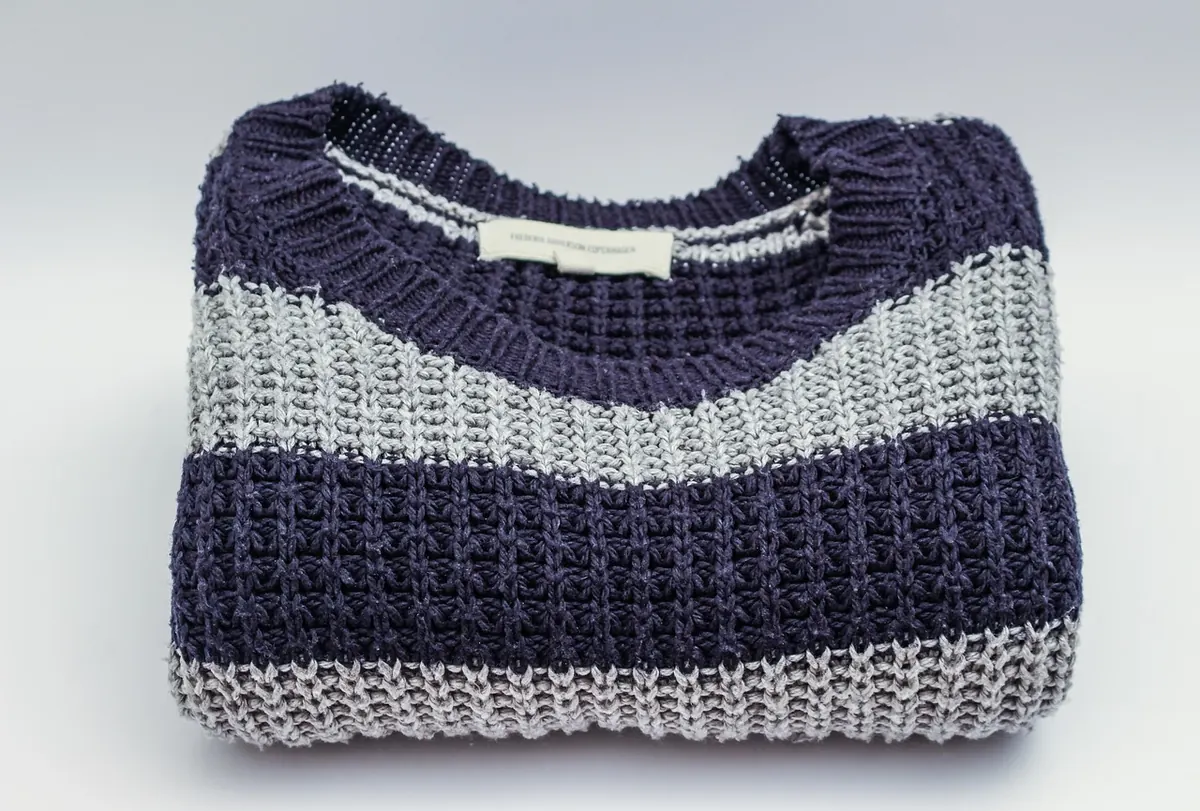
Wool is patient. It will sit in a drawer for six months and come out looking exactly as it went in — or it will come out with a moth hole the size of a pea and shoulders stretched into soft points. The difference is rarely luck. It comes down to three things: how clean the knit was when you put it away, how you folded it, and what you stored it in. Get those right, and unpacking in October is uneventful, which is exactly what you want.
Clean It, Even If It Looks Clean
Moths are drawn to wool, but what really pulls them in is the residue on it: sweat, body oils, spilled coffee, the faint trace of skin cream. A sweater worn twice and folded away is a meal waiting to be found. So the first rule of summer storage is that nothing goes into a bin straight off your back.
Hand wash in cool water with a gentle wool detergent, or use your machine's wool cycle if you trust it. Don't agitate, don't wring. Press the water out against the side of the sink, roll the knit in a towel to soak up the rest, then dry it flat and reshape it while damp. A jumper dried on a hanger turns into a tunic, and one dried in a hot dryer turns into a doll's sweater.
Dry cleaning is fine too, especially for structured or embellished pieces. Either way, the knit must be completely dry before it goes into storage. Any dampness left in the fibers becomes mildew, and mildew smells like a wet basement forever.
Fold, Don't Hang
Hanging is the single most common way people ruin knitwear. The weight of wool pulls down against the shoulders, and by autumn those shoulders have small peaks that no amount of steaming fully removes. Even a chunky sweater on a wide padded hanger will sag over months. Fold everything.
A folding method that holds its shape
- Lay the sweater flat and smooth out the sleeves.
- Fold each sleeve across the body, angling them slightly downward.
- Fold the sweater in thirds, from the bottom hem up, or in half side to side for wide pieces.
- Tuck a sheet of acid-free tissue paper into the main fold for fine gauge knits, cashmere and anything with beading.
Stack no more than three or four sweaters in a pile; the ones at the bottom get crushed and creased. Very heavy aran or cabled knits do better rolled loosely, which spreads their weight instead of pressing a hard fold line into the cables.
Choose Containers That Breathe
Natural fibers need air moving around them. Sealed plastic traps whatever moisture is left and creates a warm, still environment that moths and mildew both appreciate. That doesn't mean plastic is banned — a clean lidded bin is fine for a thoroughly dry sweater stored in a dry room — but breathable options are more forgiving.
- Cotton pillowcases or sheets: cheap, breathable, easy to label with a permanent marker on a strip of tape.
- Canvas or cotton storage bags: good for a few pieces, especially if the bag has a zip rather than a drawstring that lets dust in.
- Acid-free boxes: the safest choice for heirlooms and light-colored cashmere.
- A cedar chest: excellent if it's dry and has a tight lid, musty if it isn't. Air it out before packing.
Skip dry cleaning bags, wire hangers, and old grocery boxes. The first traps moisture, the second distorts shoulders, and the third can carry insects and their eggs into your closet.
Natural Moth Deterrents That Do Their Job
Cedar, lavender, cloves, bay leaves and dried mint all mask the scent of wool, which is what adult moths follow to find a place to lay eggs. That makes them useful, but not magic. They don't kill larvae, and larvae are what actually eat the holes. Think of deterrents as one layer in a system, not the whole system.
Cedar blocks and balls lose their potency as the surface oils evaporate. Sand them lightly with fine sandpaper or refresh them with a few drops of cedar oil every season, and keep them in the container rather than on a shelf nearby. Lavender sachets need replacing annually, because after a year in a drawer they're just dried flowers. Tuck sachets between folded layers so the scent reaches the fabric.
If you've had moths before, consider the freezer method for anything valuable: seal each piece in a zip-top bag, freeze it for several days, then let it come back to room temperature while still sealed so condensation forms on the plastic, not the wool. It kills eggs and larvae on the garment. It won't protect against moths already living in your closet, so vacuum the floor, corners and shelf edges, and wash any other woolens that have been sitting out.
For a stubborn infestation, it's worth talking to a pest control professional rather than layering more sachets on the problem.
Store It Cool, Dark and Dry
Heat fades dyes and weakens fibers; damp air invites mildew; bright light does quiet damage over months. Attics get too hot, basements and garages get too damp, and laundry rooms and bathrooms are the worst of all. A closet shelf, the space under a bed in a dry room, or a spare-room dresser are all sensible. Leave a little gap between bags and boxes so air can circulate, and don't stack storage against an exterior wall that sweats in humid weather.
Getting It All Out Again
When the weather turns, don't shake a sweater out and wear it straight away. Give each piece an hour of air in the shade — direct sun can dull color — then check the seams, underarms and cuffs for small holes before you commit. If something smells faintly of storage, a cool hand wash usually solves it. And refold along different lines than you used in spring, so the same creases don't set permanently in the same places year after year.
Done well, this takes an afternoon at the start of summer and about twenty minutes at the end. Your knitwear will come back the same size, the same color and hole-free — which is the quiet reward for doing it properly.
Photo: Pexels / Pixabay