



A wool sweater is one of the few things in a wardrobe that improves with age, right up until the wash that turns it into a felted doll's jumper. Shrinkage isn't bad luck. Wool fibers have microscopic scales that lock together when they meet heat, moisture and movement, and once they've locked, they stay locked. Wash the way wool wants to be washed — cool water, very little handling, no heat — and your sweater comes out soft, the same shape, and ready for another winter.
Start With the Care Label
The label is the only opinion that really counts. "Hand wash cold" means exactly that. "Dry clean only" means the maker isn't willing to promise anything else, so if the sweater was expensive or you love it, believe them.
If the label says "machine wash wool cycle" or "superwash," the wool has been treated to resist felting. You can use a machine, but you'll still dry it flat. Superwash is forgiving, not indestructible.
Three things worth checking before the water runs:
- Trims and structure. Beads, sequins, leather patches, silk linings and shoulder pads all do better in a professional's hands.
- Age and value. Vintage and hand-knit pieces justify a dry-cleaning bill. A sweater you bought last month generally doesn't.
- Color bleed. Press a damp white cloth against an inside seam. If dye transfers, wash the sweater alone in cool water and don't let it sit wet.
What You'll Need
- A clean sink, basin or plastic tub, rinsed of any bleach or detergent residue
- Cool water, comfortable to the touch. Never warm.
- A pH-neutral wool wash, or mild baby shampoo in a pinch. Skip regular detergent, anything with enzymes or bleach, and fabric softener, which coats the fibers and flattens them.
- Two clean bath towels
- A flat mesh drying rack, or a fresh towel laid on the floor
The Hand-Wash, Step by Step
- Fill the basin with cool water and add a teaspoon or so of wool wash. You want water that feels faintly slippery, not a basin of suds. Too much soap is hard to rinse out and leaves wool stiff.
- Turn the sweater inside out. This keeps the outer surface from pilling against the basin.
- Lower it in and press it under the water with flat hands. Soak for ten to fifteen minutes. No scrubbing, no rubbing, no holding it under a running tap.
- Lift the sweater out with both hands, supporting the whole body of it. A wet sweater is heavy, and one shoulder is not enough to carry that weight.
- Press the water out against the side of the basin, the way you'd press a sponge. Never wring or twist it.
- Refill with clean cool water, press the sweater down again, and drain. Repeat once more. Two rinses usually does it; keep going until the water runs clear of suds.
- Lay the sweater on a dry towel, roll the towel up with the sweater inside, then press down along the roll. The towel takes most of the remaining water.
If There's a Stain
Treat it before the wash, not after. Dab a little wool wash and cool water onto the spot with your fingertips, let it sit for ten minutes, then rinse. Don't rub; rubbing is what moves dye and distorts stitches. Grease marks often lift with a drop of mild dish soap. Ink, wine and coffee are worth a professional's opinion.
Dry It Flat, Always
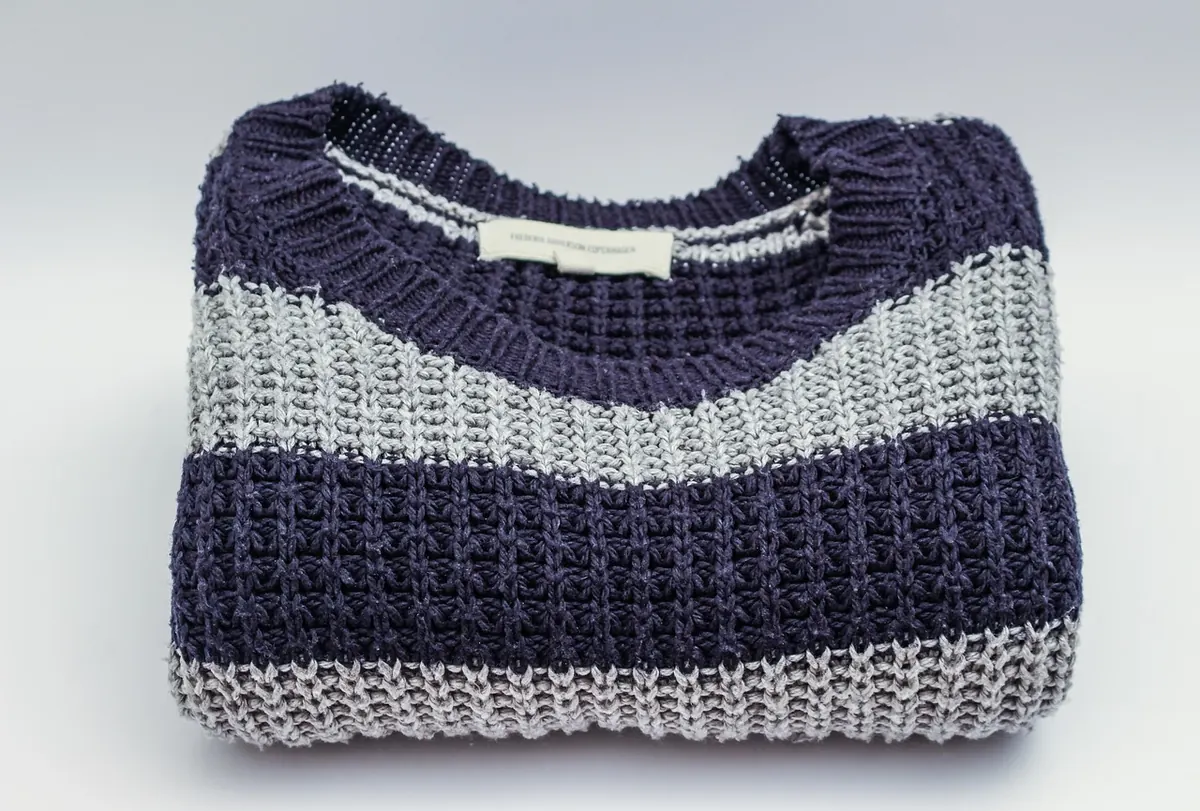
Reshape the sweater while it's still damp. Lay it flat on a mesh rack or a dry towel and smooth it back into its own dimensions: sleeves straight, ribbing flat, neckline even. If you're nervous, measure the sweater before washing and check those numbers as you shape. Nudge the fabric; don't pull it.
Keep it out of direct sun and away from radiators, wood stoves and forced-air vents. Heat is the enemy even after washing. A thick lambswool crew neck can take two days to dry. If it's sitting on a towel, turn it over once so the underside gets air too.
Hangers and clotheslines are a bad idea for wet wool. Gravity stretches the shoulders into points and adds length to the body, and neither goes back easily. Once the sweater is bone dry, folding is kinder than hanging anyway.
Machines, Dryers and Other Temptations
A front-loading machine on a wool or delicate cycle, cold water, low spin, in a mesh bag, with nothing heavy for company, is acceptable for superwash knits. An agitator top-loader is not. That central post is basically a felting machine.
The dryer is never acceptable. Even on air-only settings, tumbling breaks fibers down, and any warmth at all will shrink and felt the sweater. Take the extra day.
If a sweater has already shrunk slightly, a cool soak and careful stretching while damp can win back a centimeter or two. If it has felted into a solid, tight fabric, that change is permanent. Better to know that before the load than after.
Keeping Wool Soft Between Washes
Wool doesn't need much washing. It resists odors and sheds dirt, and mostly it wants air. After a wear, hang it somewhere with a breeze for a day, spot-clean spills as they happen, and wash only every few wears or at the end of the season.
Store clean sweaters folded, not hung, with cedar or lavender to keep moths away. Moths prefer dirty wool, so a clean sweater is already ahead. Between washes, a light mist of cool water and a few hours of rest relax creases and bring the shape back. Lift pills with a sweater comb or fabric shaver while the sweater lies flat, working in one direction.
Buy one bottle of wool wash, keep two towels in the laundry cupboard, and give up the dryer for knitwear entirely. That's the whole trick. Do it once and the next wash stops feeling like a gamble.
Photo: OlgaVolkovitskaia / Pixabay